IRC networks: the 2026 landscape
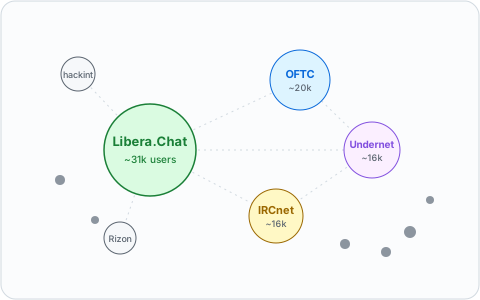
IRC networks
There is no single IRC. Instead there are dozens of independent networks —
separate islands, each with its own servers, channels, policies and culture. A
channel called #python on one network has nothing to do with #python on
another. So the first real question for anyone joining IRC is not "how do I
connect" but "connect to what".
This page is the map. For the full picture — every network sized and compared in one table — start with the networks overview.
Where most people should go
If you are here for open source, programming, Linux, security or self-hosting, the answer in 2026 is almost always Libera.Chat. It is the largest network, it is where the projects that left Freenode landed, and it has modern defaults like SASL and TLS out of the box.
- Libera.Chat network guide — servers, registration, and the big channels
- Freenode vs Libera.Chat — the 2021 split that reshaped the map
- The big four IRC networks — Libera, OFTC, Undernet and IRCnet at a glance
The other major networks
Plenty of communities live elsewhere, whether for history, region, or topic. Each of these is still very much alive:
- OFTC — Debian's home and a longtime free-software hub
- Undernet — one of the oldest networks still standing
- IRCnet — the original EFnet offshoot, strong in Europe
- EFnet — old-school, no central services, by design
- DALnet — the network that invented NickServ and ChanServ
- Rizon — anime, gaming and general chat
- hackint — security research and the CCC crowd
Is anyone still on these?
Yes — and the numbers are less grim than the rumours suggest. IRC is far below its mid-2000s peak, but it did not collapse; it settled onto a stable floor of well over 150,000 concurrent users that has held for years.
- Is IRC dead? — the actual figures, honestly framed
- Whatever happened to QuakeNet? — the network everyone assumes closed (it didn't)
Once you have picked one
Choosing the network is half of it. Next you need something to connect with, and a name that stays yours:
- Choosing an IRC client — the companion to this page
- How to register a nickname — claim and protect your nick
- How to join an IRC channel — the final step
Want everything at once? Browse all articles or jump in by topic.